

Yes. The EPA says a typical point-of-use reverse osmosis system "will generate five gallons or more of reject water for every gallon of treated water produced." Some units send up to 10 gallons to the drain per gallon treated; systems with the EPA's WaterSense label send 2.3 gallons or less (EPA WaterSense).
Why does reverse osmosis send water to the drain?
Because of how the membrane works. The EPA describes reverse osmosis as "the process by which pressure forces water through a semi-permeable membrane, creating a stream of treated water, called 'permeate,' and a stream of reject water called 'concentrate' or 'brine.'" The reject stream carries away what the membrane held back, and in a home system it goes down the drain. That stream is the waste.
How much water does a typical system send to the drain?
Five gallons or more per gallon treated, by the EPA's figure. In the EPA's words: "a typical point-of-use RO system will generate five gallons or more of reject water for every gallon of treated water produced. Some inefficient units will generate up to 10 gallons of reject water for every gallon of treated water produced." (EPA WaterSense, "Point-of-Use Reverse Osmosis Systems.")
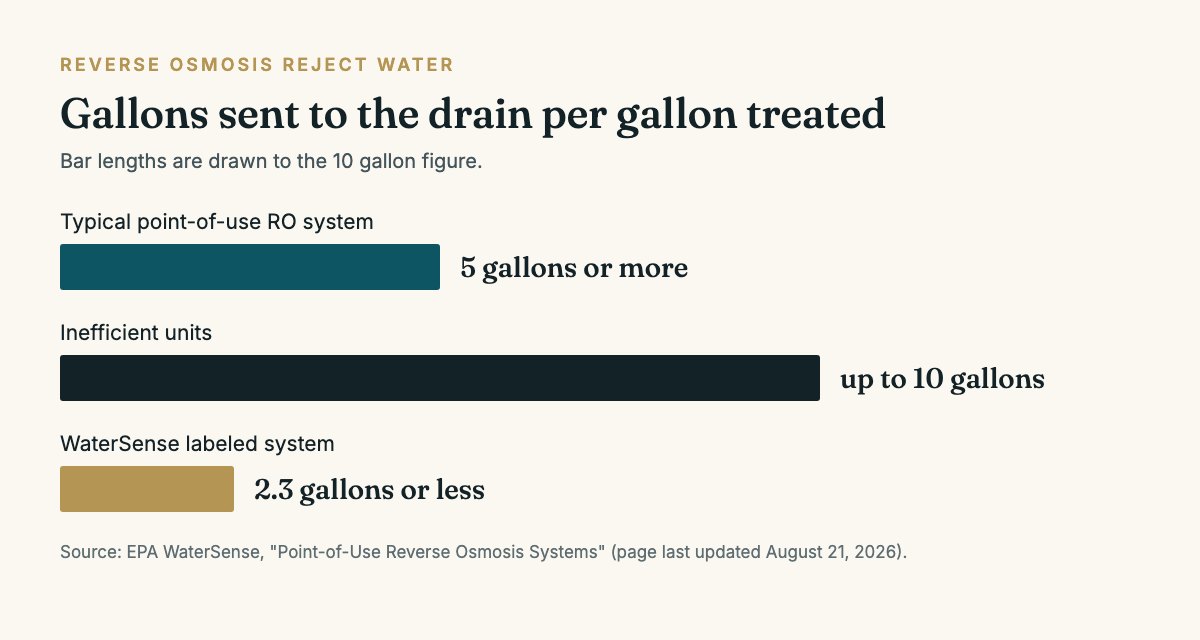
- Typical point-of-use RO system: 5 gallons or more
- Inefficient units: up to 10 gallons
- WaterSense labeled system: 2.3 gallons or less
How much does a WaterSense labeled system send?
2.3 gallons or less per gallon treated. The EPA says labeled systems "must demonstrate that they send just 2.3 gallons of water or less down the drain for every gallon of treated water they produce." The EPA also puts a yearly number on the difference: replacing a typical system with a WaterSense labeled one "will reduce water use on average by more than 3,100 gallons of water per year," which it says comes to "47,000 gallons over the lifetime of the system" (same EPA page).
Is a WaterSense labeled system as good at treating the water?
The EPA says the label does not trade treatment for efficiency: "The WaterSense specification for point-of-use RO systems ensures that labeled RO systems are just as effective at providing the high-quality treated water consumers expect from these products." Products carrying the label "are independently certified to ensure they meet EPA criteria for efficiency and performance" (same page).
How do you know if a system is WaterSense labeled?
Look for the WaterSense label on the product or its listing. The EPA says all products bearing the label are independently certified. Its page, linked below, has a product search and the specification.
What are the other ways to treat water at home without a drain line?
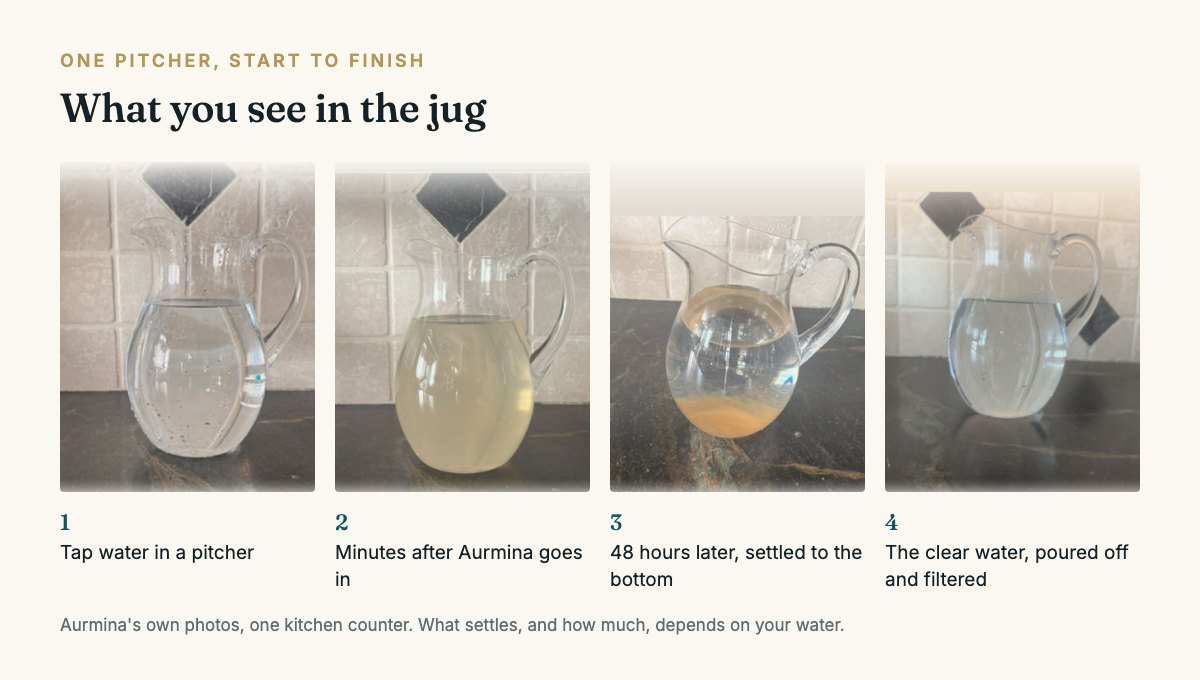
Several household methods use no drain at all: a pitcher or gravity filter, a countertop filter, or a treatment you add to the water in a jug. Aurmina is the last kind: major and trace minerals, in the ratios found in volcanic stone, for your water jug. You add it to a jug of tap water, let it settle, then pour off the clear water, following the steps on our product page. It works differently from a membrane system, and we are not comparing what the two remove.
Common questions
How much water is wasted by reverse osmosis?
The EPA's figure for a typical point-of-use system is five gallons or more of reject water per gallon treated, and up to 10 for inefficient units. WaterSense labeled systems send 2.3 gallons or less.
Why does my reverse osmosis system waste so much water?
The membrane makes two streams: treated water and reject water. In a home system the reject stream goes to the drain, and in a typical system it is the larger of the two by the EPA's figure.
Does a more efficient system treat the water less well?
Not by the EPA's standard. It says WaterSense labeled systems are just as effective at providing the treated water consumers expect.
Does Aurmina replace a reverse osmosis system?
They are different kinds of product. Reverse osmosis is a membrane system on a drain line. Aurmina brings major and trace minerals, in the ratios found in volcanic stone, for your water jug: you add it to a jug of tap water, let it settle, and pour off the clear water. We are not comparing what the two remove.
A treatment you add to a jug of tap water
See AurminaSources: EPA WaterSense, Point-of-Use Reverse Osmosis Systems (page last updated August 21, 2026). Our FAQ, aurmina.com/pages/faqs.
Marketing support by PELORA Marketing